Quick start
From a niche idea to a usable shortlist in a few steps.
Choose format. Toggle Books or Kindle to match what you plan to publish.
Enter a keyword. Type the niche you are analysing, or tap a suggested term.
Hit Analyze. Fee pulls the top competing titles and their public signals.
Read the scorecard. Competitors, average reviews, average price, and a most-beatable score.
Scan the table. Sort by ABSR, reviews, or monthly sales to judge how entrenched the leaders are.
Check KW-in-title. See how many top books put the keyword in their title, a sign of how optimised the niche is.
Screenshot walkthrough
The full screen once, then a closer look at the parts that matter.
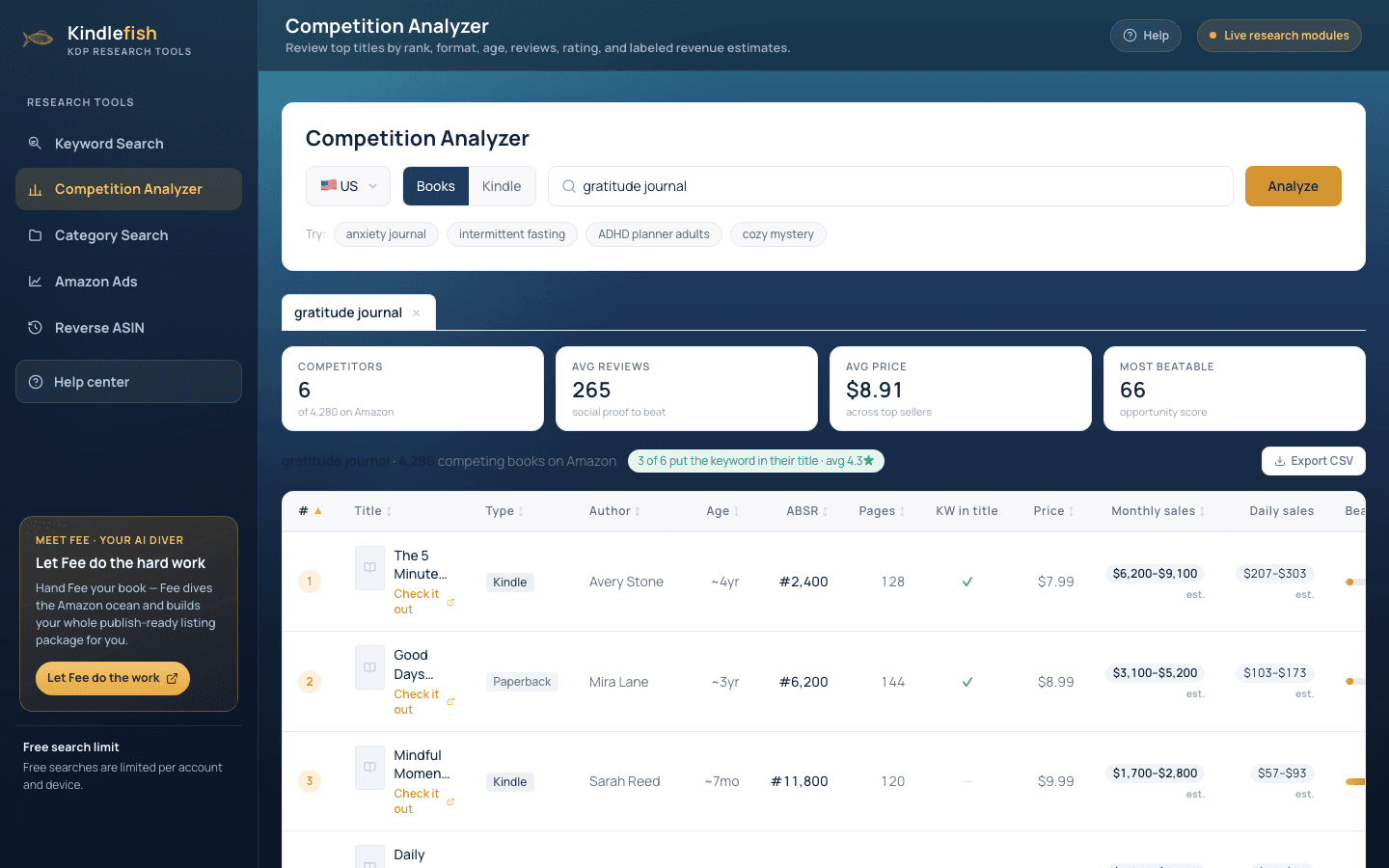
- BooksKindleUSgratitude journal
- Competitors6of 4,280
- Most beatable66opportunity score
- AgeABSRPagesReviewsPrice~4yr#2,400128265$7.99
- Monthly salesDaily sales$6,200-$9,100$207-$303
How to read the results
What each number means, and what good looks like.
ABSR
Amazon Best Sellers Rank. Lower usually means stronger sales momentum.
Reviews and rating
Social proof you would need to match. Lots of reviews means a harder niche to enter.
Monthly / daily sales
Confidence-labelled revenue ranges for each title, useful for sizing a niche.
Age
How long a book has been live. Newer winners can signal a still-open niche.
KW in title
Whether the top books put the keyword in their title, a sign of optimisation.
Most beatable
A combined score of how weak the competition is. Higher means more opening.
Best practices
Small habits that make the data pay off.
Look for thin review counts. A page one full of books with fewer reviews is a niche you can break into faster.
Watch the age column. Recent titles ranking well means the niche is still rewarding fresh entrants.
Beat the average, not the leader. You do not need to outrank number one on day one. Aim above the page-one average first.
Cross-check with Keyword Search. Pair beatable competition with real demand before you commit to a niche.